
The Sacred Valley: Pisac, Ollantaytambo, Maras and Moray
The Inca heartland in one day: the terraces of Pisac, the fortress of Ollantaytambo, the salt pans of Maras and the circles of Moray, with lunch in the valley.
Where the day goes
- 1Pick-up in Cusco
- 2The archaeological park of Pisac
- 3Pisac market
- 4Lunch in the valley
- 5The fortress of Ollantaytambo
- 6The Inca village
- 7The salt pans of Maras
- 8The terraces of Moray
- 9Return to Cusco
- How longFull day (about 11 hours)
- Group sizeUp to 12
- LanguagesEnglish, Spanish, French, German, Turkish
- CancellationCancel up to 7 days before the date for a full refund to the card you paid with. From 6 days before, the day is not refundable. If we have to cancel, for the weather or for safety, you choose another date or a full refund.
About this day
For the Incas, the valley of the Urubamba river below Cusco was the breadbasket of the empire: lower and warmer than the capital, watered by the river and terraced up its mountainsides for maize. Its towns and estates belonged to the Inca rulers and their families, and in 1537 Ollantaytambo was where Manco Inca, leading the resistance, turned back a Spanish force in one of the few battles the conquerors lost.
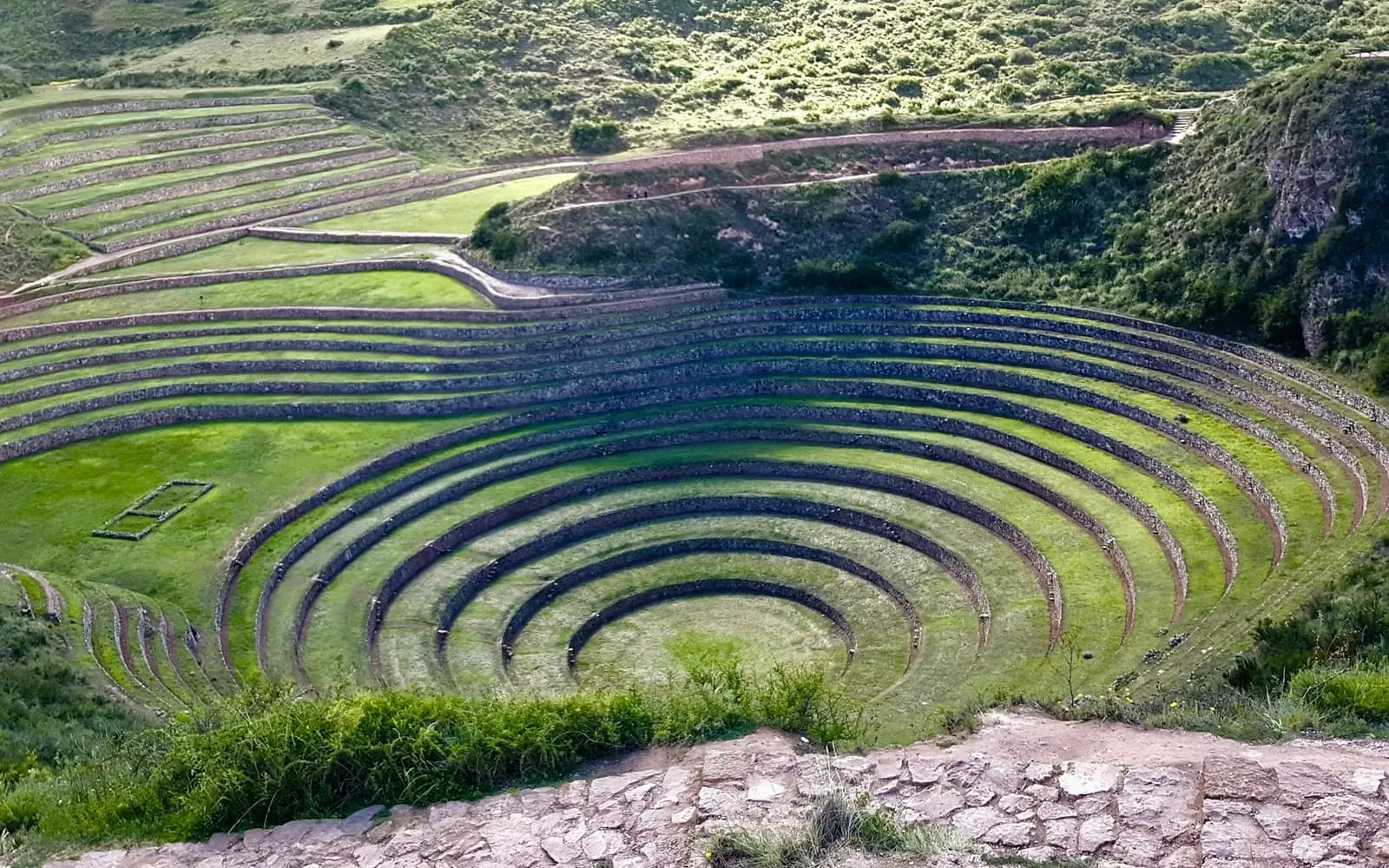
Pisac crowns a ridge with sweeping terraces and a citadel of temples, baths and houses, above a town known for its crafts market. Ollantaytambo rises in giant stone terraces to its Temple of the Sun, built of great blocks of pink stone hauled from a quarry across the river, above a village whose streets and water channels still follow the Inca plan. Higher up, on the plateau, the salt pans of Maras spill down a ravine in thousands of small pools fed by a salty spring, and at Moray the ground drops in great circular terraces that the Incas are thought to have used to study crops at different temperatures.
The day runs at an unhurried pace with a licensed guide who knows the sites and the stories behind them. You come down from Cusco across the high plain with the valley opening below, walk the terraces of Pisac and Ollantaytambo, sit down to a buffet of Andean dishes, and climb back onto the plateau for Maras and Moray in the afternoon light, with the snow peaks of the Urubamba range on the skyline, before the drive back to Cusco in the evening.
- The sweeping agricultural terraces and hilltop citadel of Pisac
- Time at the Pisac crafts market for textiles, alpaca, ceramics and silver
- The fortress of Ollantaytambo, where Manco Inca held off the Spanish in 1537
- The Temple of the Sun and its wall of giant pink stone blocks
- Ollantaytambo village, still lived in along its Inca streets and water channels
- A buffet lunch of Andean dishes in the Sacred Valley
- The salt pans of Maras, thousands of pools worked by local families since Inca times
- The circular terraces of Moray, thought to be an Inca crop laboratory
- The snow peaks of the Urubamba range across the high plateau
How the day goes
- 1Pick-up in CuscoHistoric centre, CuscoThe day begins at 07:00 with pick-up from your hotel in the historic centre. The road climbs out of the city, crosses the high plain and then winds down into the Sacred Valley, with the Urubamba river below. The drive to Pisac takes about an hour.
- 2The archaeological park of PisacPisac, CalcaHigh above the town, Inca terraces curve around the mountainside up to a citadel of temples, ritual baths and houses, with the finely cut stonework of the Intihuatana sector at its heart. Your guide explains how the terraces were built, drained and watered, and how the site kept watch over the valley. The paths have uneven stone steps, so take them at your own pace.
- 3Pisac marketPisac, CalcaDown in the town, the market around the main square sells woven textiles, alpaca knitwear, ceramics and silver alongside stalls of local produce. There is time to browse and bargain before the drive along the valley floor to Urubamba.
- 4Lunch in the valleyUrubambaLunch is a buffet of Andean cooking: highland soups, quinoa, and the potatoes and maize of the valley in their many varieties, with vegetarian dishes among them. Drinks are paid separately.
- 5The fortress of OllantaytamboOllantaytambo, UrubambaAbout half an hour further down the valley, Ollantaytambo rises in steep terraces to the Temple of the Sun and its wall of six enormous monoliths of pink stone. Your guide tells the story of the battle of 1537 and points out the quarry on the far side of the river where the stones were cut. The climb to the top is steep, and every terrace is a place to stop and take in the view.
- 6The Inca villageOllantaytambo, UrubambaBelow the fortress, the village keeps its Inca grid of narrow lanes, stone walls and running water channels, and families still live in houses raised on Inca foundations. A short walk through its streets shows a town that has been lived in without a break for more than five centuries.
- 7The salt pans of MarasMaras, UrubambaThe road climbs back onto the plateau to the salt pans, where a salty spring trickles down a ravine into thousands of small terraced pools. Local families work the pans by hand as they have since Inca times, letting the water evaporate in the sun and raking up the salt. You walk the paths along the edge of the pans, and stalls at the entrance sell salt from the pools.
- 8The terraces of MorayMoray, MarasAt about 3,500 metres, Moray is a set of great circular terraces sunk into the ground like amphitheatres. The temperature changes from the rim to the bottom, and the Incas are thought to have used the levels to adapt crops to different conditions. You follow the marked path around the rim, where the whole design reads best.
- 9Return to CuscoHistoric centre, CuscoThe drive back across the plateau takes about an hour and a half, with the peaks of the Urubamba range behind you in the late light. You are back at your hotel in the historic centre in the early evening, about eleven hours after setting out.
The order can change with the weather or the size of the group on the day. Pick-up times are confirmed with you the evening before.