At a glance
- Harvest
- Late February to April
- Harvest festival
- Vendimia, early March
- Wine areas
- Luján de Cuyo, Maipú, Uco Valley
- From Buenos Aires
- About 1 hour 45 minutes by air
- Signature grape
- Malbec
In this article6 sections
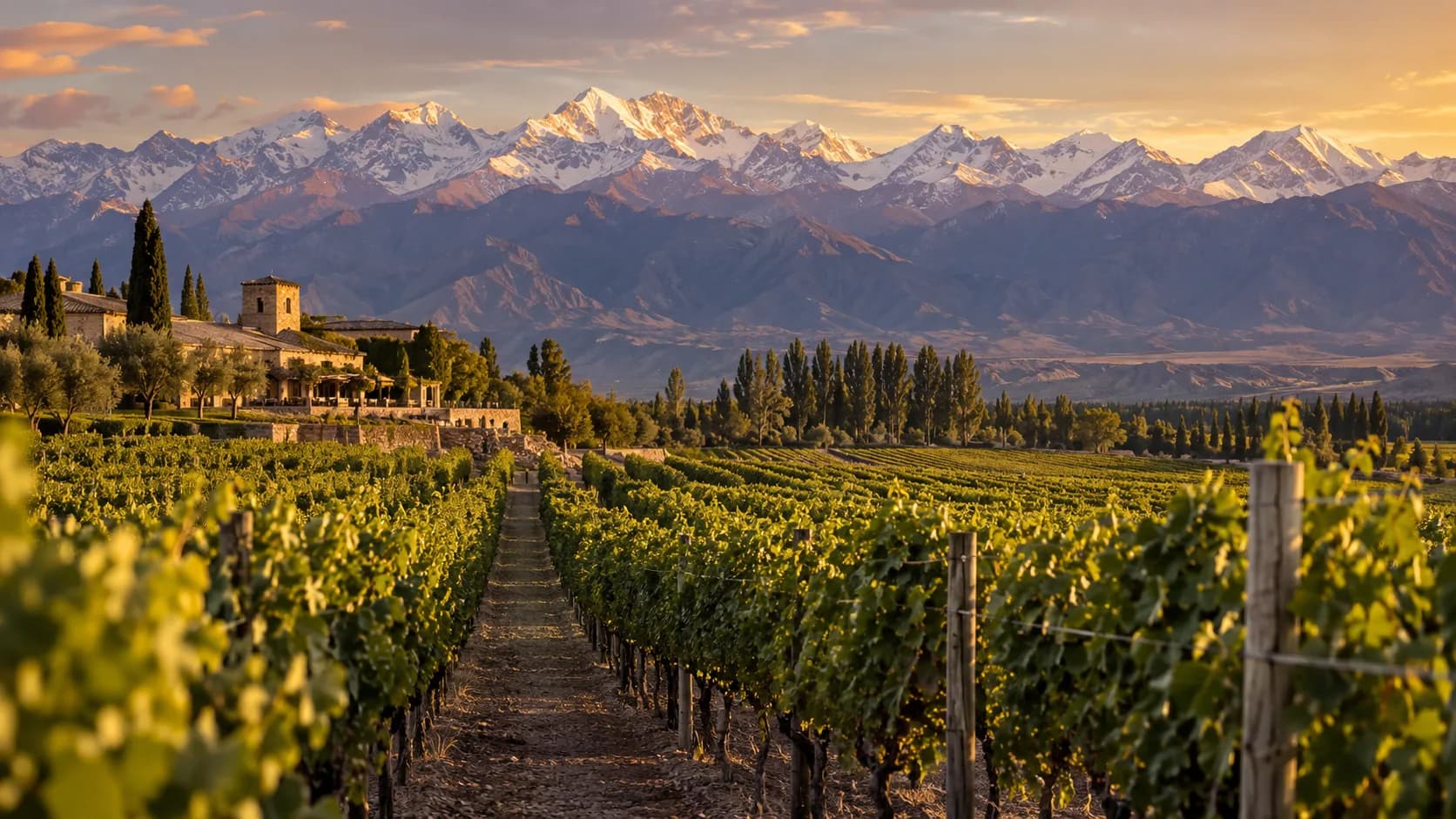
Mendoza is beautiful all year: vines, poplars and the Andes standing behind everything. But for a few weeks between late February and April the region is doing the thing it exists to do, and visiting during the harvest is a different experience from visiting outside it.
What changes at harvest
The wineries are busy, which means they are alive in a way they are not for the rest of the year. You may see fruit arriving, sorting tables running and tanks being filled. Tastings at harvest can include things that are not for sale, such as juice mid-ferment or a barrel sample, depending on the winery and the day.
The city changes too. The Vendimia, the region’s harvest festival, culminates in early March and is the largest event in the provincial calendar, and Mendoza fills accordingly. It is worth seeing once and worth avoiding if crowds are not your thing; the harvest continues either side of it.
Where to spend your days
Luján de Cuyo, just south of the city, is home to many of the established wineries and is the easiest area to visit without much planning. Maipú is flatter and close to the city, and it is the one people explore by bicycle. The Uco Valley lies further south, roughly an hour and a half by road, and is higher and the most dramatic of the three: it is where the mountains stop being a backdrop and start explaining why the wine tastes the way it does.
One area a day is the right pace. Two is a mistake you make once.
Getting there and around
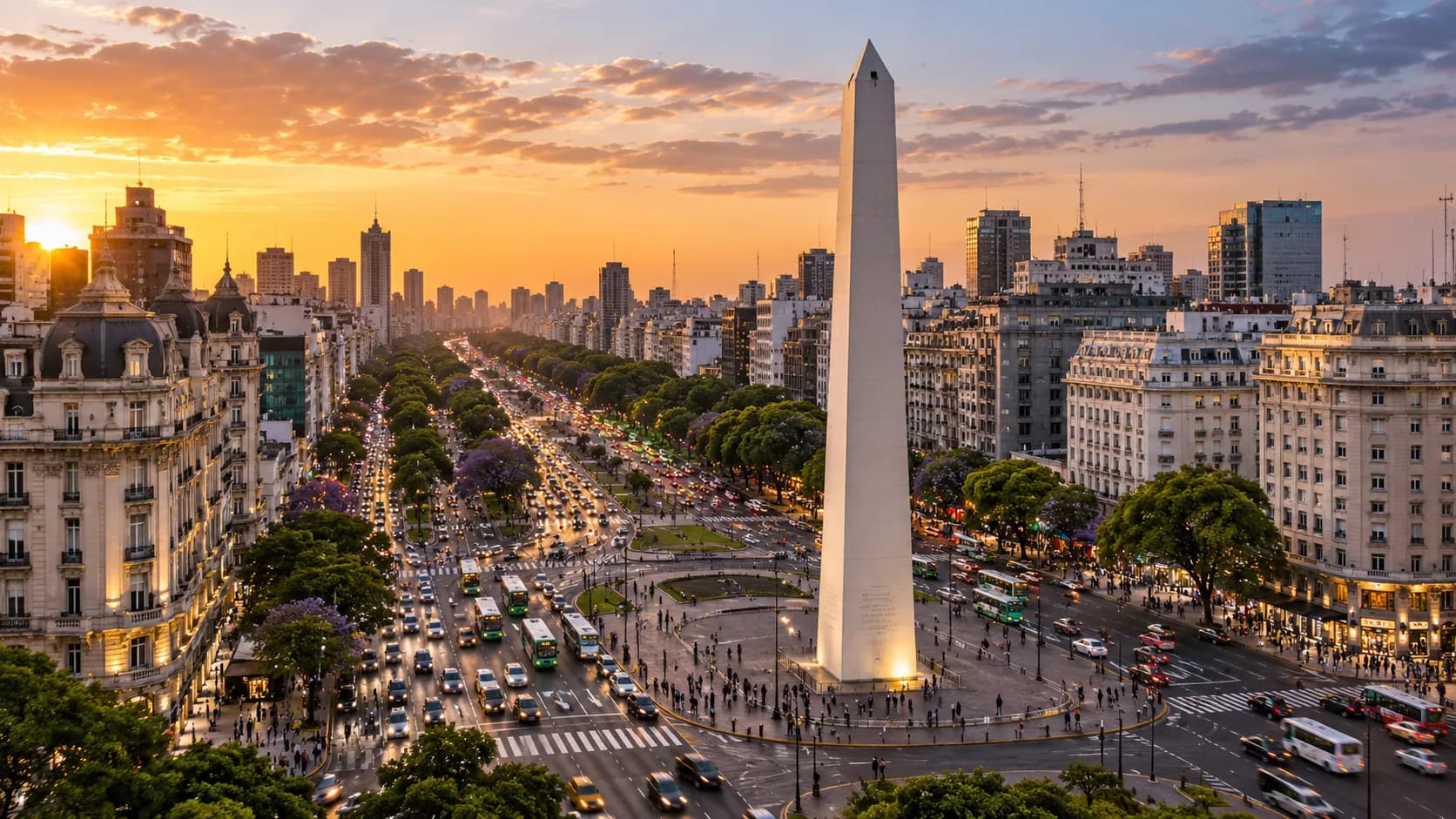
Most visitors fly from Buenos Aires, about an hour and forty-five minutes, and base themselves either in the city or at a wine lodge among the vineyards. A city base gives you restaurants and evenings out; a lodge gives you mornings among the vines and the Andes at the window.
Distances between wineries are longer than they look, and the tasting is the point of the day, so a driver or a guided day out removes the only genuinely difficult decision of the trip.
 New routeArgentina Essentials7 days · 6 nights · ArgentinaFrom $2,890 per personSee the journey
Outside the harvest
Mendoza is still worth the trip at other times. Spring, from September to November, brings new leaves and mild days; in April and May the vines turn gold and red; and winter is cold and clear, with snow on the mountains. The wineries receive visitors all year, though some keep shorter hours in the quiet months.
Plan it with us
What we arrange for a trip like this one. Each is booked and paid in one step, and priced in full before you pay.
- New routeArgentina Essentials7 days · 6 nights · ArgentinaFrom $2,890 per personSee the journey
 FlightsFlights for your datesFlights worldwide, booked automatically once your payment is confirmed.Search flights
 HotelsHotels for your datesSearch by city or hotel and see the price for your dates and party before you pay.Search hotels
 InsuranceTravel medical insuranceCover valid across Latin America, Cuba included, priced for your dates and ages.From $3.70 per person per dayPrice your cover
Questions
When is the grape harvest in Mendoza?
Usually from late February to April, depending on the grape and the altitude. Higher vineyards, such as those in the Uco Valley, tend to pick later.
When is the Vendimia festival?
The harvest festival builds through February and culminates in early March, with the main celebrations in the city of Mendoza. The exact dates vary a little each year.
Do I need to book winery visits in advance?
Yes, especially during harvest and in the Uco Valley, where many wineries receive visitors by appointment only.
How many days do I need in Mendoza?
Two or three full days lets you visit two wine areas at an easy pace. Our Argentina Essentials journey gives Mendoza two nights at a wine lodge.