At a glance
- Route
- Cancún, Valladolid, Chichén Itzá, Mérida, Uxmal
- Time needed
- Seven days
- Best season
- November to April
- Getting around
- Hire car, or coaches between towns
- Longest drive
- About two and a half hours
In this article7 sections
Yucatán is the part of Mexico that most rewards having your own wheels. The peninsula is flat limestone, the main highways are in good condition, and the three things worth building a week around, Maya sites, cenotes and colonial towns, are spaced at distances you can cover before lunch.
The shape of the week
A workable route starts in Cancún or Mérida, then runs to Valladolid, Chichén Itzá, a cenote day, Mérida and Uxmal before heading back. Nothing on that list is more than about two and a half hours from the stop before it, and most legs are closer to ninety minutes.
- Days 1–2: arrive in Cancún and drive to Valladolid; an evening in its main square.
- Day 3: Chichén Itzá at opening time, a cenote in the afternoon.
- Day 4: on to Mérida by way of Izamal, the yellow town.
- Day 5: Mérida on foot.
- Day 6: Uxmal and the Puuc hills.
- Day 7: back to the airport, or on to the coast.
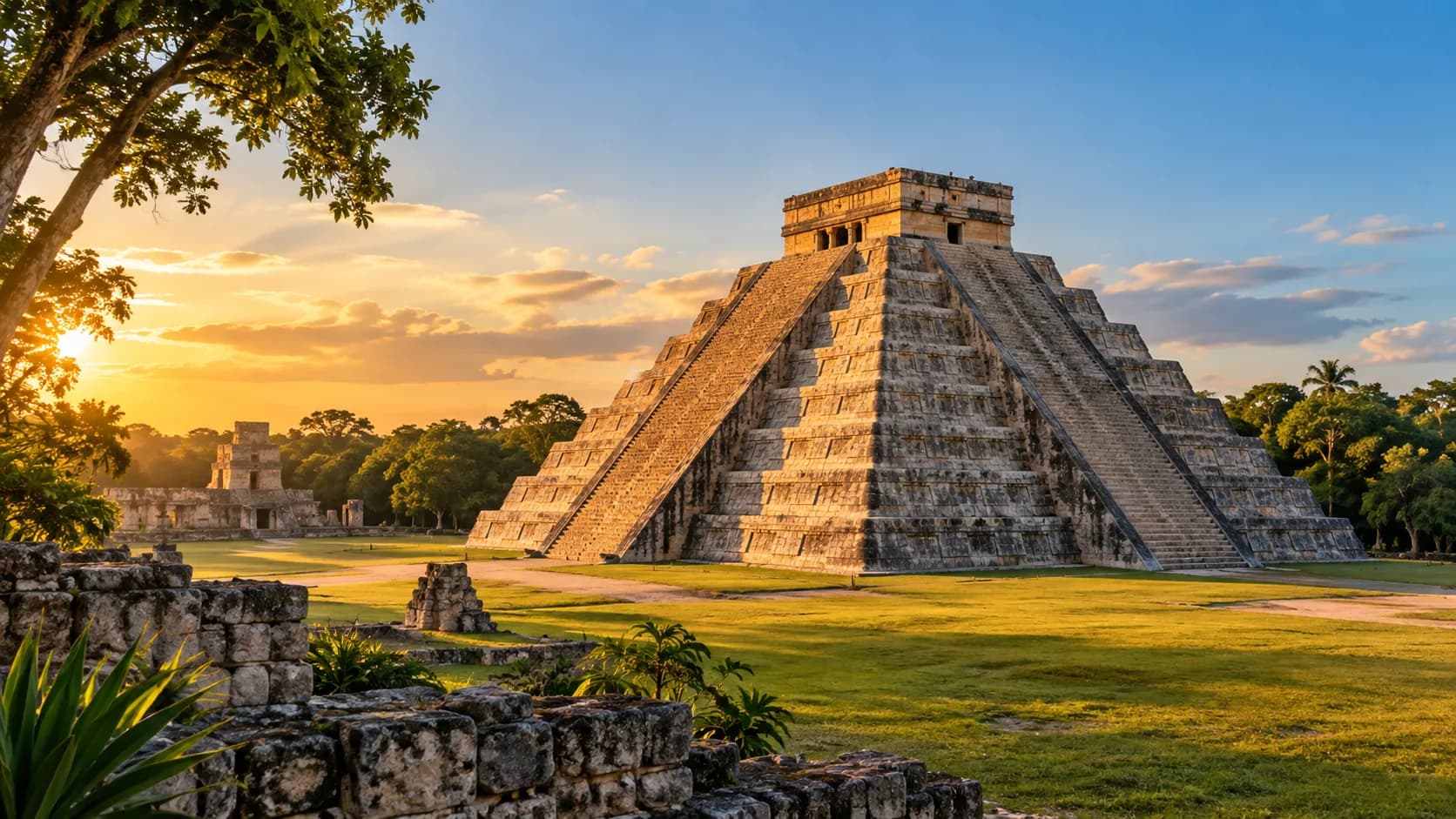
Chichén Itzá, and the case for the early start
The site opens early in the morning, and the coach tours from the resorts on the coast tend to arrive from mid-morning. Those two facts shape the whole visit: the difference between arriving at opening and arriving at half past ten is the difference between a quiet archaeological site and a crowd.
Staying in Valladolid, under an hour away, makes the early start realistic. Staying on the coast does not. Take water, a hat and sun protection: there is little shade on the main plaza.
Cenotes: the right counterweight
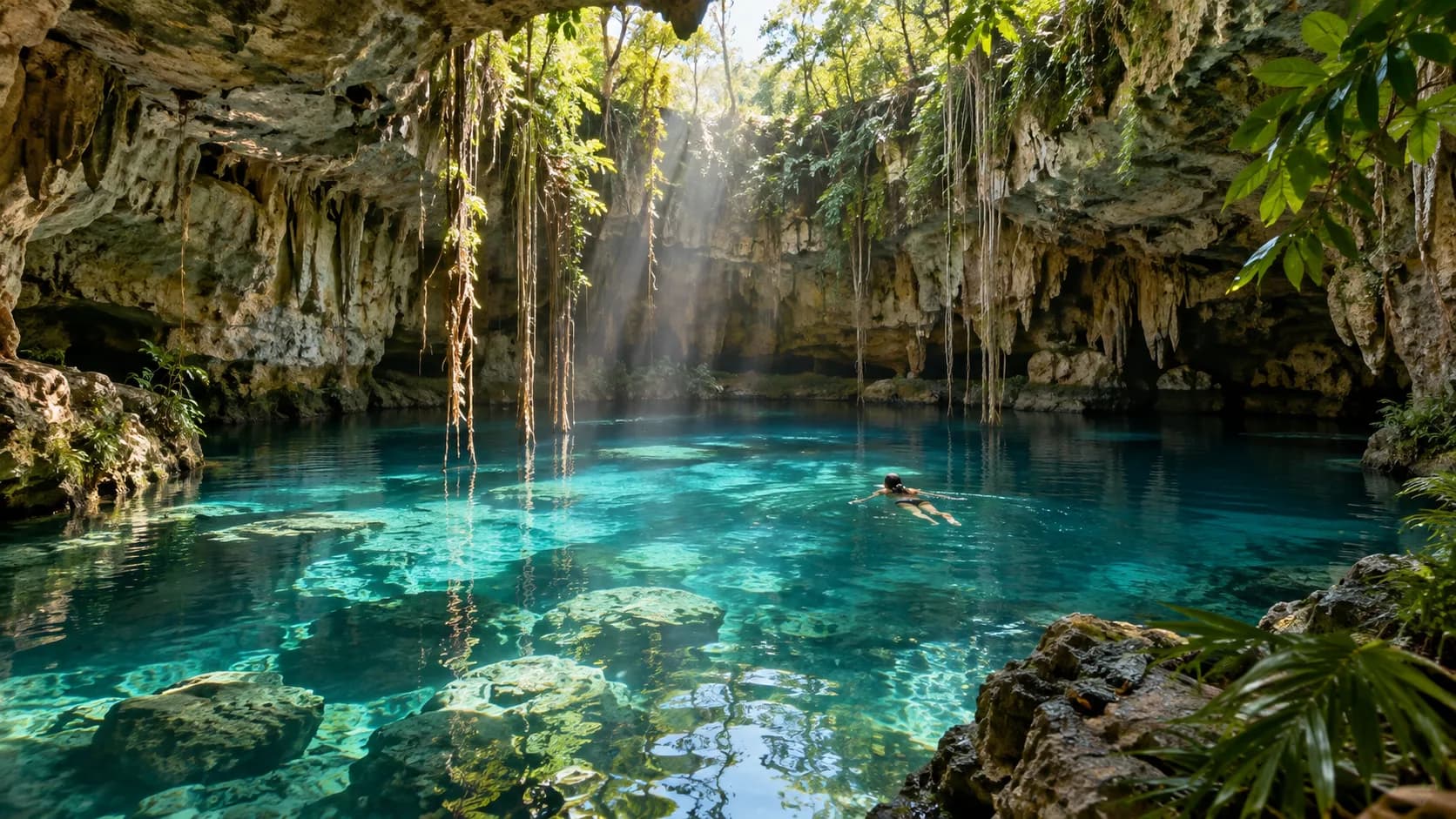
A day among ruins in Yucatán heat needs a cenote at the end of it, and the peninsula has thousands of these water-filled sinkholes. The ones signposted from the main roads are busy and fine; quieter ones are found by asking locally. Take a towel and expect the water to be cool, which after a morning at a Maya site is the entire point.
Many cenotes ask you to shower before you swim and to keep sunscreen and repellent out of the water, to protect it. A life jacket is often offered or required; take it if you are not a strong swimmer.
Mérida deserves more than a night
Most itineraries treat Mérida as a stopover. It is the liveliest city on the peninsula: a large colonial centre, a serious food culture, and evening streets that fill with people rather than emptying. Two nights is the minimum that makes sense, and three is not a waste.
Eat the Yucatecan dishes you will not find done the same way elsewhere in Mexico: cochinita pibil, pork slow-cooked with achiote and bitter orange, and sopa de lima.
When to go
The dry months from November to April are the most comfortable, with warm days and few storms. Late spring is the hottest time inland. From June the rains arrive, usually as afternoon storms, and the Caribbean hurricane season runs to the end of November.
If you want the coast as well, add it at the end of the week. Tulum and the beaches are worth their own days, but threading them between the inland sites turns a relaxed week into a driving one.
 Signature journeyCaribbean Grand Journey15 days · 14 nights · Dominican Republic · Cuba · MexicoFrom $4,990 per adultSee the journey
Plan it with us
What we arrange for a trip like this one. Each is booked and paid in one step, and priced in full before you pay.
- Signature journeyCaribbean Grand Journey15 days · 14 nights · Dominican Republic · Cuba · MexicoFrom $4,990 per adultSee the journey
 FlightsFlights for your datesFlights worldwide, booked automatically once your payment is confirmed.Search flights
 HotelsHotels for your datesSearch by city or hotel and see the price for your dates and party before you pay.Search hotels
 EntryMexico visaFor Turkish, Ukrainian and Russian passports, for tourism. We check first whether you need one.From $35 per travellerCheck your passport
 InsuranceTravel medical insuranceCover valid across Latin America, Cuba included, priced for your dates and ages.From $3.70 per person per dayPrice your cover
Questions
How many days do you need for Yucatán?
A week covers Chichén Itzá, a few cenotes, Valladolid, Mérida and Uxmal at a comfortable pace. Add days if you want the Caribbean coast as well.
Do I need a car in Yucatán?
It is the most flexible way to travel the peninsula, since the sites and cenotes are spread out. First-class coaches link the main towns if you prefer not to drive.
When should I visit Chichén Itzá?
At opening time, before the coach tours from the coast arrive from mid-morning. Staying in Valladolid, under an hour away, makes that easy. Check the opening hours for your date before you go.
Do I need a visa for Mexico?
Many passports enter Mexico for tourism without a visa, and your entry is recorded on arrival. Some passports do need one; we process the Mexico visa for Turkish, Ukrainian and Russian passports.